
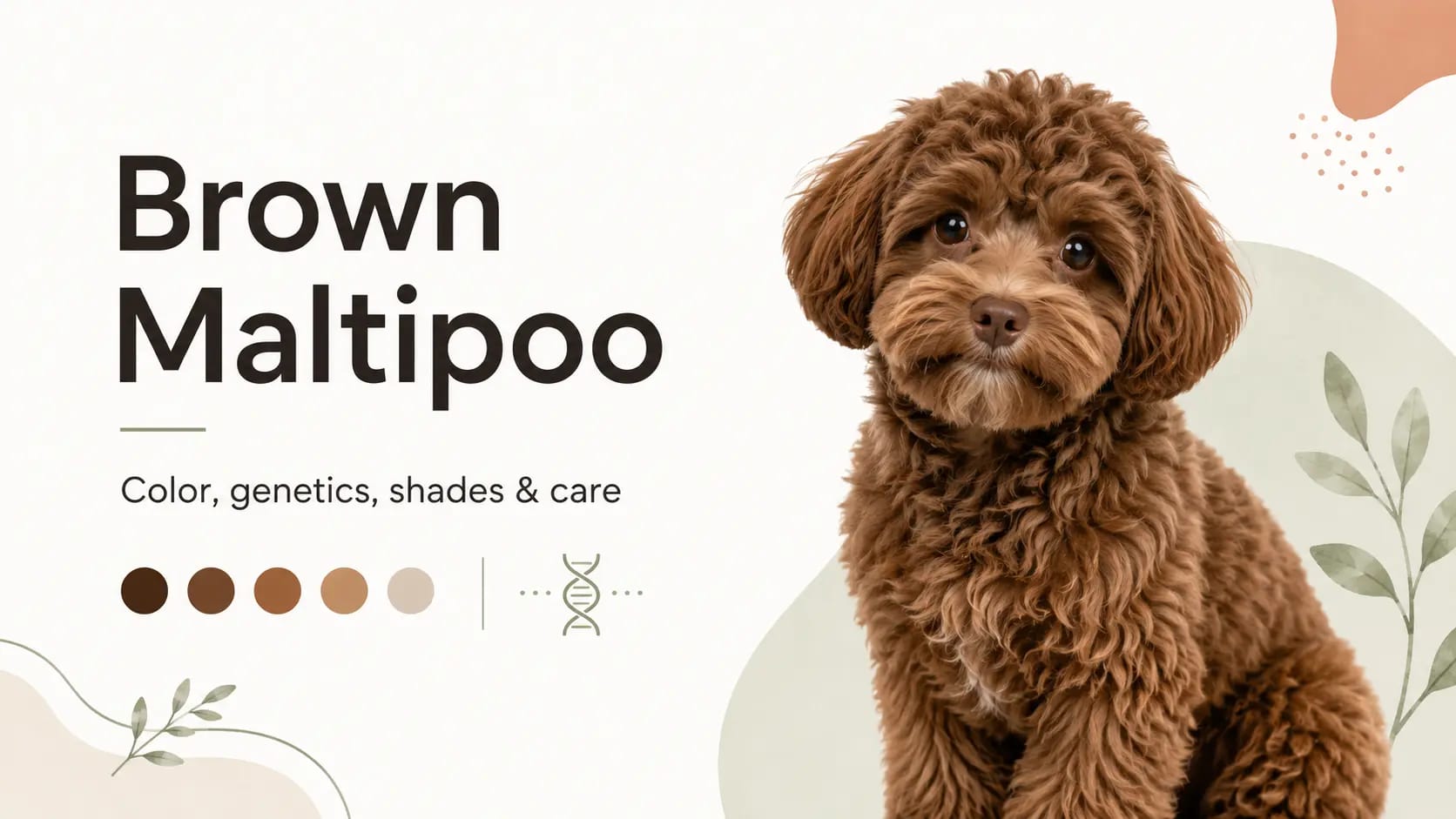
A true brown Maltipoo, also called a chocolate Maltipoo, is one of the rarest colors in the breed. Producing one requires a specific recessive gene from the Poodle parent that two copies of must be present before any brown coat appears. Because of this, even breeders specifically working toward brown coats cannot guarantee them in every litter.
There is also an important distinction worth understanding from the start: what breeders and sellers label as "brown" varies widely. True chocolate brown is a deep, rich color with a brown nose and brown pigment throughout. Lighter shades, often marketed as caramel, bronze, golden, or tan, are a different thing entirely. This guide explains how to tell them apart, what genetics produce each, and what to expect as a brown Maltipoo matures.
| Rarity | Rare. One of the harder Maltipoo colors to produce consistently |
|---|---|
| Color source | Poodle parent only, via a specific recessive gene (b/b) |
| Key identifier | Brown nose, not black. All true chocolates have a brown or liver-colored nose |
| Shade range | Dark chocolate to milk chocolate to cafe au lait to silver beige |
| Will it stay brown? | Often fades. Deep brown may settle to cafe au lait or silver beige with age |
| When fading starts | From about 6 months, progressing through the first two years |
| Full grown size | Same as any Maltipoo: 5 to 20 lbs, 8 to 14 inches |
| Price premium | Yes. Brown Maltipoos typically cost more than common colors |
What Makes a Brown Maltipoo?
As with all dark Maltipoo colors, brown comes entirely from the Poodle parent. The Maltese almost always carries white genetics and contributes no dark pigment at all.
Brown coat color in dogs is controlled by what geneticists call the B locus. The B locus has two versions: the dominant B allele, which produces black pigment, and the recessive b allele, which converts black pigment to brown. Here is the key point: a dog needs two copies of the recessive b allele (written b/b) for its coat to be brown. One copy is not enough. A dog with one B and one b (written B/b) looks black, not brown, because the dominant black allele overrides the recessive brown one.
This is why brown Maltipoos are genuinely rare. Both the Poodle parent must carry at least one b allele, and the puppy must inherit a b from each parent to show the brown coat. In a Maltipoo cross where the Maltese contributes no dark pigment at all, you need specific breeding choices on the Poodle side to reliably produce b/b puppies.
Brown is more consistently achieved in F1b and multigenerational Maltipoos, where careful selection of Poodle parents with known brown genetics increases the probability of the color appearing in the litter.
How to confirm a true brown: the nose test
Every true chocolate Maltipoo has a brown or liver-colored nose, not a black one. This is not optional or variable. The B locus affects all eumelanin pigment in the body, including the nose, eye rims, lips, and paw pads. If the dog is b/b, all of those areas are brown. If the nose is black, the dog is not a true chocolate, regardless of what the coat looks like.
This single check eliminates most of the confusion around brown labeling. A dog with a warm golden coat and a black nose is an apricot or a tan variation. A dog with a deep brown coat and a brown nose is a true chocolate.
Is It Really Brown? True Chocolate vs Common Look-Alikes
Because brown and chocolate Maltipoos command a price premium, the terms are sometimes applied loosely to lighter shades that are not genuinely brown in the genetic sense. Here is how to tell them apart.
| Label used | True brown? | Nose color | What it actually is |
|---|---|---|---|
| Chocolate / dark brown | Yes | Brown | True b/b coat |
| Milk chocolate / medium brown | Yes (usually) | Brown | True b/b, possibly early fading |
| Cafe au lait | Sometimes | Brown | Faded brown or brown plus dilute gene |
| Caramel | No | Black | Apricot or dark apricot variation |
| Bronze | No | Black | Warm apricot or golden apricot |
| Tan / golden | No | Black | Light apricot or cream with warmth |
| Silver beige | Sometimes | Brown | Heavily faded brown |
The practical takeaway: check the nose. A brown nose confirms b/b genetics. A black nose means the dog is in the apricot-to-golden-to-cream color family, whatever it is being called.
Brown Maltipoo Shades: The Full Spectrum
Not all brown Maltipoos look the same, and the variation across the brown spectrum is significant.
Dark chocolate: The deepest, richest brown, closest to dark baking chocolate or espresso. The rarest and most sought-after shade. A true dark chocolate Maltipoo has an evenly dark coat with no lighter areas and a noticeably brown nose.
Milk chocolate: A mid-depth brown, warmer and slightly lighter than dark chocolate. Still a true b/b coat with a brown nose, but with a creamier, softer tone. Many dogs described simply as "brown" fall here.
Cafe au lait: A warm, light tan-brown, the color of coffee with milk. This shade sits at the lighter end of the true brown spectrum. Many cafe au lait Maltipoos are born darker and have faded to this shade. They retain a brown or slightly pinkish nose.
Silver beige: The lightest end of the brown fading spectrum. A very pale, almost parchment-colored dog with subtle warm undertones and a light brown or pinkish nose. Heavily faded chocolates settle here.
The shade your brown Maltipoo displays as a puppy is not necessarily the shade it will keep. Fading is common, and the journey from one end of this spectrum to the other can happen gradually over the first two years of life.
Will a Brown Maltipoo Stay Brown?
Many will not, at least not in the same deep shade they started with. The Poodle's progressive graying gene (the G locus) affects brown coats just as it affects black ones. A chocolate puppy that carries this gene will gradually fade as it matures.
The specific fading pattern for brown is different from black. A black Maltipoo tends to fade to silver or gray tones. A brown Maltipoo tends to fade toward cafe au lait, silver beige, or a very pale warm beige. The pigment shifts rather than simply diluting to gray, giving the faded coat a distinctive warm, creamy tone.
There are three realistic outcomes for a brown Maltipoo's coat as it ages:
It holds. The dog maintains a deep or medium brown throughout its life. This happens when the Poodle parent comes from non-fading brown lines with no progressive graying gene. A chocolate Poodle parent that has stayed deep brown at five years or older is the best indicator.
It fades to cafe au lait. The coat lightens progressively from the darker puppy color to a softer, lighter warm brown over the first one to two years. This is the most common outcome for brown Maltipoos. The dog retains its brown nose and warm undertones but is noticeably lighter than it was as a puppy.
It fades significantly to silver beige. In dogs where both the progressive graying gene and possibly a dilute gene (D locus) are present, fading can be substantial. A puppy born a rich milk chocolate may settle to a very pale, creamy beige with a pinkish nose as an adult.
Fading stabilizes at roughly two years old. After that, the color should remain fairly consistent.
How to Predict Whether Your Brown Maltipoo Will Fade
You cannot know with complete certainty before a puppy is born, but you can make an informed assessment.
Ask the breeder whether the Poodle parent has been tested for the G locus (progressive graying gene). A Poodle that tests negative will not pass the fading gene to its offspring. This is the most reliable predictor available.
Ask about the current coat color of the Poodle parent and its age. A chocolate Poodle that is five years old and still deep brown is a strong sign of non-fading genetics. A Poodle that has visibly lightened suggests the gene is present.
Ask to see photos of previous brown litters at two years old. If the litter consistently faded to cafe au lait or lighter, the same parents are likely to do so again.
Be cautious of breeders who promise that a puppy will stay dark. Without G locus testing, no guarantee is possible. A promise without genetic documentation is a guess.
Brown and White Maltipoo: Coat Patterns
Brown Maltipoos appear in solid coats and in various two-tone patterns. The same patterns that occur in black and white dogs also occur in brown and white combinations, but with warmer tones.
Parti: White as the base color, with patches of brown across the body. No specific pattern requirement. Each dog is unique.
Tuxedo: Brown across most of the body with white on the chest, chin, and paws. The warm brown against white creates a distinct, polished look.
Phantom: A dark brown base with specific lighter tan or cream markings on the eyebrows, cheeks, chest, lower legs, and under the tail. The brown nose and warm marking tones make phantom brown Maltipoos particularly distinctive.
Brown and white mismark: Mostly brown with an irregular white patch on the chest or a paw. Informal rather than a true pattern.
The brown areas of these combination coats are subject to the same fading process as solid brown coats.
Full Grown Brown Maltipoo: Size and Appearance
Color does not affect size. A brown Maltipoo reaches the same adult dimensions as any other Maltipoo: 5 to 20 pounds and 8 to 14 inches tall at the shoulder, depending on parent size.
The distinctive feature of a fully grown chocolate Maltipoo beyond the coat itself is the complete absence of black pigment on the body. The nose, eye rims, and paw pads are all brown or liver-toned rather than black. The eyes are often amber or hazel rather than the dark brown typical of lighter Maltipoos. This warm pigmentation gives the face a soft, cohesive look that many owners find particularly striking.
For a detailed adult size breakdown with a weight chart by age, visit our full grown Maltipoo size guide.
Brown Maltipoo Personality and Temperament
Coat color does not affect personality. A brown Maltipoo is the same affectionate, playful, intelligent, and people-bonded companion as a white, cream, or apricot one. The temperament comes from the Maltese and Poodle genetics, not from the pigment gene.
For a full overview of what to expect from a Maltipoo's personality, trainability, and day-to-day behaviour, see our Maltipoo temperament guide.
Grooming a Brown Maltipoo
The brushing frequency, professional grooming schedule, and mat prevention approach are identical to those for any Maltipoo. Coat type, wavy or curly, drives the grooming demands far more than color.
That said, brown coats have a few specific considerations.
Use a shampoo for dark or brown coats. Products formulated for white coats contain brightening or whitening agents that work against dark pigment. Over time they dull and degrade brown color. Look for shampoos labeled for dark, brown, or chocolate coats, which enhance richness and depth rather than stripping it.
Avoid prolonged sun exposure. UV light bleaches all dark coats over time. This accelerates fading and can shift a warm brown toward a dull, brassy tone. For dogs that spend significant time outdoors, a UV-protective dog coat during summer helps preserve the coat's color.
Tear staining looks different on brown dogs. The rust-orange staining visible against a light Maltipoo coat appears as a darker, wet-looking discoloration against a brown coat. It is still present and still needs management. Check the inner corners of the eyes regularly and keep the face dry.
Color-enhancing conditioners can help maintain depth. Some dog conditioners formulated for brown or chocolate coats contain ingredients that enhance and deepen the natural color. These are not dyes and do not change the genetic outcome of fading, but they can help a fading coat look richer at its current shade.
For full guidance on brushing, bathing, mat prevention, and haircut styles, visit our Maltipoo grooming guide.
Brown Maltipoo Price: What to Expect
Brown Maltipoos typically carry a price premium over more common colors. From a reputable breeder, expect to pay roughly $2,000 to $4,500 for a true chocolate puppy, somewhat above the standard range for white, cream, and apricot.
Very dark, confirmed-non-fading chocolate puppies backed by G locus genetic testing command the highest prices within that range. They are also the ones most worth the premium because the color outcome is most predictable.
One honest point: paying more for a brown coat does not mean it will stay brown. If maintaining a deep chocolate coat is important to you, the additional cost should come with genetic documentation of non-fading lines, not just the visual appeal of the puppy at 8 weeks old.
For full context on Maltipoo ownership costs beyond the purchase price, see our Maltipoo cost guide.
Finding a Brown Maltipoo
Because b/b genetics require specific parent selection, breeders who consistently produce true chocolate Maltipoos are in the minority. Waiting lists of three to six months are common.
When you search, ask breeders directly about the nose color of their brown puppies, the G locus status of the Poodle parent, and whether they can show you photos of previous litters at two years old. A breeder who can answer those questions clearly is working with brown genetics intentionally rather than simply labeling any warm-toned puppy as chocolate.
The same standards that apply to any Maltipoo purchase apply here: health-tested parents, puppies raised in the home, vet records provided, and a written health guarantee. Color rarity does not change those fundamentals.
For a full guide to finding a responsible Maltipoo breeder and what to watch for, see our Maltipoo puppies guide.
From a reputable breeder, typically $2,000 to $4,500. Non-fading chocolates backed by genetic testing sit toward the top of that range. Be cautious of very high prices without supporting genetic documentation.