
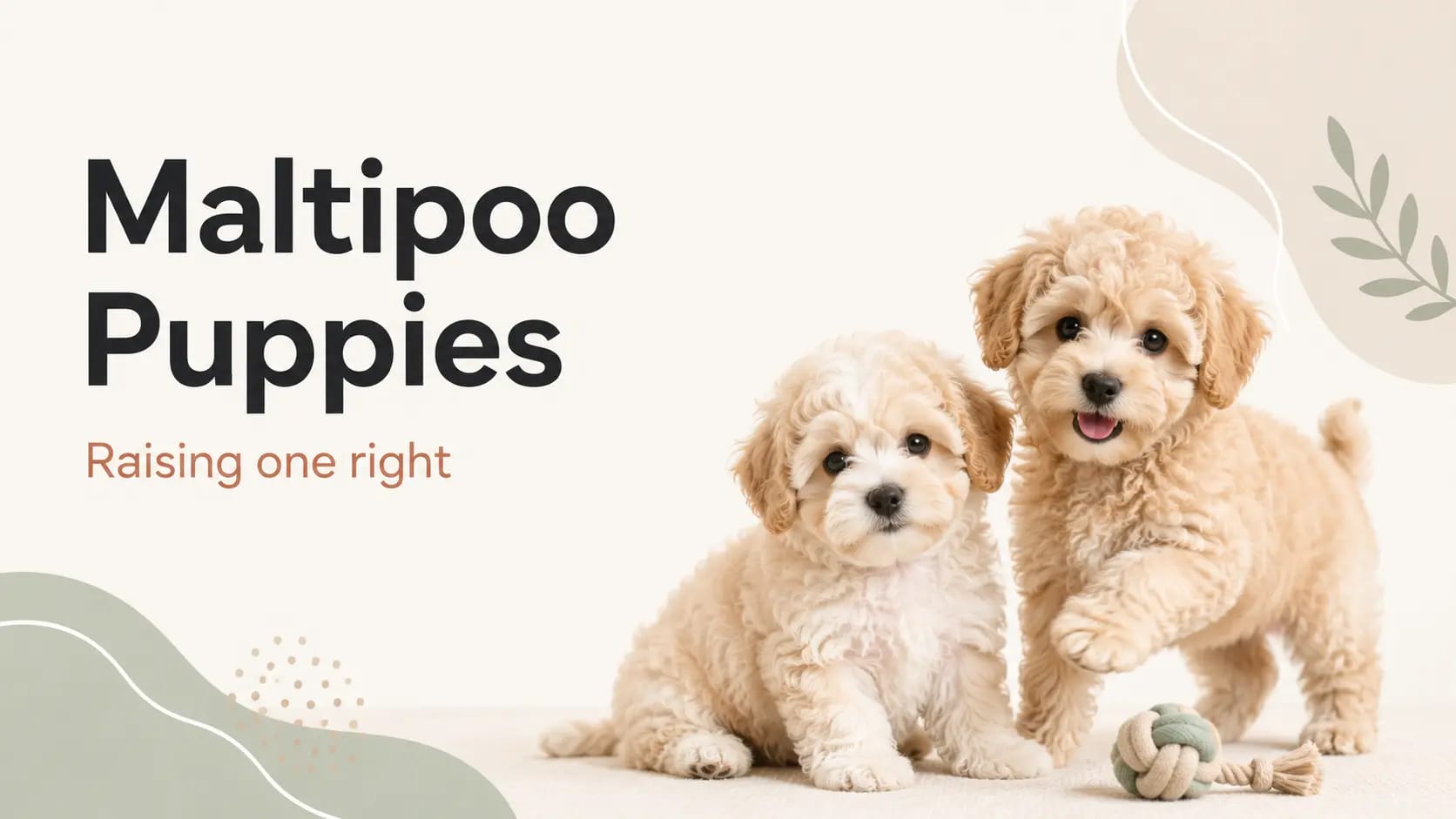
Maltipoo puppies are a cross between a Maltese and a Toy or Miniature Poodle. They arrive tiny, soft, and almost impossibly cute, and they grow into affectionate, low-shedding companions that typically weigh 5 to 20 pounds as adults. This guide covers everything you need to know: what to expect from a Maltipoo puppy, how they grow, what they cost, how to find one from a responsible source, and exactly how to care for one in the first weeks and months at home.
| Breed type | Maltese x Toy or Miniature Poodle cross |
|---|---|
| Adult weight | 5 to 20 lbs (varies by parent size) |
| Adult height | 8 to 14 inches at the shoulder |
| Puppy price range | $1,000 to $4,000 from a reputable breeder |
| Ready to come home | 8 weeks minimum (12 weeks is common) |
| Coat as a puppy | Soft, fluffy puppy coat (changes at 6 to 10 months) |
| Coat as an adult | Wavy to curly, low-shedding |
| Full grown | Most reach adult size by 9 to 12 months |
| Lifespan | 12 to 15 years |
| Good for | Families, singles, apartment living, first-time owners |
What Is a Maltipoo Puppy?
A Maltipoo is the offspring of a purebred Maltese and a Toy or Miniature Poodle. First-generation (F1) puppies come directly from those two purebred parents. Second-generation (F1b or F2) puppies have at least one Maltipoo parent, which tends to increase the curliness and low-shedding nature of the coat.
The Maltipoo is not recognised as an official breed by the American Kennel Club. They are a designer hybrid, which means there is natural variation in size, coat type, and temperament even within the same litter. What you can generally count on is a small, intelligent, affectionate dog that bonds closely with its family.
For a full overview of the breed, including temperament, health, and what adult life looks like, visit our complete Maltipoo guide.
What Do Maltipoo Puppies Look Like?
Maltipoo puppies are round, fluffy, and very small at birth. They carry a puppy coat that is softer and usually fluffier than the adult coat they will eventually grow into.
Coat texture varies depending on which parent's genetics dominate. A puppy that takes more after the Poodle side tends to develop a curlier adult coat. A puppy that takes more after the Maltese side tends to grow into a wavier, silkier coat. You cannot always predict this at 8 weeks, which is one reason the puppy-to-adult coat change surprises many owners.
The puppy coat transition
Between 6 and 10 months, most Maltipoos go through a coat change. The soft puppy fur thins out and the adult coat grows in. During this period, you may notice more loose hair and more tangles than usual. Matting can develop quickly if you skip brushing sessions during this phase. It is the one time most Maltipoo owners are caught off guard by grooming demands.
Read our full Maltipoo grooming guide for step-by-step advice on managing the transition and keeping the coat mat-free.
Maltipoo puppy colors
Maltipoo puppies come in white, cream, apricot, red, brown, chocolate, black, silver, and various parti and phantom combinations. Some colors fade significantly as the puppy grows. Apricot and red puppies in particular often lighten considerably by the time they reach adulthood. If coat color matters to you, ask the breeder about the parent dogs and how previous litters have faded over time.
For a detailed breakdown of all colors and which fade, see our Maltipoo colors guide.
Maltipoo Puppy Growth Stages (Birth to 12 Months)
Understanding when each developmental milestone happens helps you give the right care at the right time.
| Age | What is happening |
|---|---|
| 0 to 2 weeks | Eyes and ears are sealed. Puppy cannot regulate body temperature. Entirely dependent on the mother for warmth, milk, and stimulation. |
| 2 to 4 weeks | Eyes open. Ears begin to function. First wobbly attempts at walking. Baby teeth start to emerge. |
| 4 to 8 weeks | Social development begins. Puppies interact with littermates and learn bite inhibition through play. Weaning from mother's milk starts at around 3 to 4 weeks and is usually complete by 7 to 8 weeks. This is the period when breeders begin early socialisation. |
| 8 to 12 weeks | The earliest most reputable breeders send puppies home (and the legal minimum in most US states). Vaccination series begins. This is a critical socialisation window: gentle, positive exposure to new people, sounds, surfaces, and environments during this period shapes how the puppy responds to the world as an adult. |
| 3 to 6 months | Puppy teeth fall out and adult teeth come in. Chewing increases. Rapid growth continues. This is also when puppy energy peaks. Begin training in short, consistent sessions. |
| 6 to 10 months | The puppy coat begins to shed and the adult coat grows in. Tangles and mats are more frequent during this phase. Spaying or neutering is typically performed in this window, consult your vet for timing. |
| 9 to 12 months | Most Maltipoos reach close to their adult size and weight. Smaller teacup-sized dogs may finish growing sooner. Larger standard-sized Maltipoos may continue filling out slightly until 12 to 14 months. |
When Do Maltipoo Puppies Stop Growing?
Most Maltipoos reach roughly 80 to 90 percent of their adult size by the time they are 9 months old. Full adult size is typically achieved between 10 and 12 months. Smaller varieties, including teacup and toy-sized Maltipoos, may stop growing as early as 8 months. Larger Maltipoos that lean toward the Miniature Poodle side may continue developing until 12 to 14 months.
Adult weight varies considerably based on the parent dogs. A Maltipoo bred from a Toy Poodle (4 to 6 lbs) and a small Maltese will typically weigh 5 to 10 lbs at maturity. A Maltipoo from a Miniature Poodle parent (10 to 15 lbs) can reach 10 to 20 lbs fully grown.
For a detailed adult size breakdown by parent type, with a weight chart by age, see our guide on full grown Maltipoos.
How Much Do Maltipoo Puppies Cost?
Maltipoo puppy prices from a reputable breeder typically fall between $1,500 and $4,000 in the United States. The wide range reflects differences in breeder reputation, health testing, location, coat color, and the size of the litter. Rare colors such as red, chocolate, or champagne sometimes command higher prices at the upper end of that range or beyond.
Here is a realistic cost breakdown:
| Source | Typical price range | Notes |
|---|---|---|
| Reputable breeder | $1,500 to $4,000 | Health-tested parents, health guarantee, vaccination records included |
| Rescue or adoption | $100 to $500 | Less common to find puppies. More likely to find adult dogs than puppies. |
| Classified listings (Craigslist, Facebook) | $500 to $3,000 | Highest risk. No guarantee of health testing or ethical breeding. |
A price at the very low end, say under $500 to $800 for a puppy, is a warning sign rather than a bargain. Responsible breeding involves genetic health screening for both parents, proper veterinary care, vaccinations, and a clean, socialised environment. Those costs are real and they are reflected in the price.
For a full breakdown of Maltipoo ownership costs including food, grooming, and vet bills over a lifetime, visit our Maltipoo cost guide.
Where to Find Maltipoo Puppies
There are three main ways to find a Maltipoo puppy. Each comes with different levels of risk and different expectations.
Reputable breeders
The safest option for a healthy, well-socialised puppy is a breeder who prioritises the health and welfare of their dogs over profit. Reputable breeders health-test both parents for common genetic conditions, raise puppies in a home environment (not a kennel or cage), begin socialisation early, and provide documentation of vaccinations and vet visits.
Expect a waiting list. Good breeders are not always available on demand because they do not breed continuously. A wait of 3 to 6 months is normal and a sign that the breeder is not overbreeding their dogs.
Rescue and adoption
Adopting a Maltipoo from a rescue organisation is less expensive and gives a dog in need a home. Most rescue Maltipoos are adults rather than puppies, but this is not always the case. Organisations that focus specifically on poodle mixes or small breeds are a good place to start. Your local shelter may also have Maltipoo mixes available.
What to avoid
Avoid purchasing from pet stores, which typically source puppies from high-volume breeding operations. Be equally cautious with online listings where you cannot verify the source. If a seller asks to meet you in a parking lot, offers no health records, and pressures you to decide quickly, walk away.
How to Choose a Reputable Maltipoo Breeder
Knowing what good looks like makes it much easier to spot what it does not. Use this list when you contact or visit a breeder.
Questions to ask:
- Can I see health clearances for both parents? (Look for genetic testing for patellar luxation, progressive retinal atrophy, and Legg-Calve-Perthes disease.)
- Are the puppies raised inside the home, with regular human contact?
- At what age do you send puppies home? (8 weeks is the minimum. Breeders who release at 6 weeks are cutting the socialisation window short.)
- What vaccinations has the puppy received, and what is included in the health guarantee?
- Can I see where the puppies and parents live?
Red flags to watch for:
- Multiple breeds always available, with puppies ready immediately (high-volume mill operation)
- Unwilling to let you visit or video-call to see the puppies in their environment
- No health testing information available for the parents
- Wants to meet you at a neutral location rather than their home or facility
- Price is unusually low with vague explanations
A trustworthy breeder will welcome your questions. They want their puppies to go to good homes and they will want to ask you questions too.
What to Prepare Before Bringing Your Maltipoo Puppy Home
Getting the home ready before the puppy arrives makes the first days much smoother.
Supplies to have ready
- Crate sized for a small dog (big enough to stand, turn, and lie down, no larger)
- Soft bedding and a snuggle toy or low-heat puppy heating pad for warmth
- Food and water bowls (stainless steel or ceramic)
- Small-breed puppy food (ask the breeder what the puppy has been eating and continue that initially)
- Collar with ID tag and a lightweight leash
- Puppy pads if you plan indoor potty training initially
- Enzymatic cleaner for accidents
- A few safe chew toys
Puppy-proofing the space
Maltipoo puppies are small and fast. Before they come home, get down to floor level and look for anything a puppy could chew, swallow, or fall from. Electrical cords, toxic plants (lilies, azaleas, sago palm), cleaning products, and anything small enough to fit in a puppy mouth all need to be out of reach. Block access to staircases until the puppy is bigger and more coordinated.
The First Weeks at Home
The first two weeks are when routines take hold. Consistency during this window shapes the puppy's behaviour for months to come.
The first 24 to 48 hours
A new puppy arriving home is experiencing the biggest disruption of its short life. It has lost its mother and littermates, and everything smells unfamiliar. Keep the first day quiet. Limit the number of people meeting the puppy at once. Show the puppy its crate, its water bowl, and where it will go to the bathroom. Let it explore at its own pace.
Some whining and crying at night in the first few days is entirely normal. A warm water bottle wrapped in a blanket, a worn T-shirt with your scent, and a ticking clock near the crate can help. The settling-in period usually takes one to two weeks.
Vet visit
Schedule a vet appointment within the first week of bringing your puppy home. The vet will do a full physical examination, confirm or continue the vaccination schedule, and check for any health issues you should know about. Bring any health records the breeder provided.
Feeding a Maltipoo Puppy
Maltipoo puppies have small stomachs and fast metabolisms. They need more frequent meals than adult dogs.
| Age | Meals per day | Notes |
|---|---|---|
| 8 to 12 weeks | 4 times per day | Small portions spaced evenly through the day |
| 3 to 6 months | 3 times per day | Gradually reduce frequency as the puppy grows |
| 6 months onward | 2 times per day | Morning and evening meals |
Choose a high-quality puppy food formulated for small breeds. Small-breed formulas have smaller kibble sizes and calorie densities designed for faster metabolisms. Look for the AAFCO (Association of American Feed Control Officials) nutritional adequacy statement on the label, which confirms the food meets the minimum standards for puppy nutrition.
Continue feeding whatever the breeder was using for the first one to two weeks to avoid stomach upset. If you want to switch foods, do it gradually by mixing increasing amounts of the new food into the old food over 7 to 10 days.
Fresh water should be available at all times.
For detailed recommendations on the best food options for Maltipoos at every life stage, see our best food for Maltipoos guide.
Health Risks Specific to Maltipoo Puppies
Maltipoo puppies are generally hardy, but they inherit some health tendencies from both parent breeds. Knowing what to watch for can make a real difference.
Hypoglycemia (low blood sugar)
This is the most serious short-term health risk for very small or teacup-sized Maltipoo puppies, and it can be life-threatening if not caught quickly. Tiny puppies have almost no fat reserves to draw on between meals, and their blood sugar can drop dangerously if they go too long without eating, are under stress, or have a stomach upset.
Signs of hypoglycemia in a puppy:
- Sudden lethargy or weakness
- Wobbly or staggery walking
- Trembling or shaking
- Pale gums
- Confusion or glassy eyes
- In severe cases, collapse or seizure
What to do: If you notice these signs, rub a small amount of honey, maple syrup, or corn syrup onto the puppy's gums immediately. Contact your vet or an emergency animal hospital right away if the puppy does not improve within a few minutes. Do not wait to see if it passes on its own.
To reduce the risk, feed your puppy on schedule, do not skip meals, and avoid letting the puppy go more than four hours without food during the day.
Patellar luxation
This is a condition where the kneecap slips out of position, and it is common in small breeds including Maltipoos. Signs include skipping on a back leg, sudden lameness, or a puppy that periodically holds a back leg up while walking. Most cases are mild and managed without surgery, but severe cases may need veterinary intervention. Ask your vet to check the patellas at each routine visit.
Dental crowding
Small mouths often mean overcrowded teeth. Maltipoos are prone to dental disease from a young age. Introduce tooth brushing as early as possible, using a small dog-specific toothbrush and enzyme toothpaste. Daily brushing is ideal. The earlier you make it a routine, the easier it becomes.
Ear infections
The floppy, hair-filled ears of a Maltipoo trap moisture and debris, creating conditions that encourage bacterial or yeast growth. Check the ears weekly. Healthy ears should be pale pink, with no smell and no dark discharge. Ask your vet or groomer to show you how to clean them safely.
For a full overview of all health conditions that affect Maltipoos, see our Maltipoo health guide.
Maltipoo Puppy Vaccination Schedule
Your vet will create a schedule specific to your puppy's health and your region, but the general framework looks like this:
| Age | Vaccines typically given |
|---|---|
| 6 to 8 weeks | First distemper/parvovirus combination (DA2PP) |
| 10 to 12 weeks | Second DA2PP booster |
| 14 to 16 weeks | Third DA2PP booster, rabies vaccine |
| 12 to 16 months | Boosters for DA2PP and rabies |
| Every 1 to 3 years | Adult boosters depending on vaccine type |
Bordetella (kennel cough), leptospirosis, and Lyme disease may also be recommended depending on your puppy's lifestyle and exposure risk. Discuss these with your vet.
One important caution for small-breed puppies: multiple vaccines given simultaneously can be harder on a tiny dog's immune system than on a larger breed. Talk to your vet about whether it makes sense to spread vaccines across separate visits. This is not standard practice everywhere, but it is a reasonable conversation to have.
Grooming a Maltipoo Puppy
The puppy coat is easier to manage than the adult coat but it still needs regular attention. Start grooming habits early, even before they are strictly necessary. Getting a young puppy comfortable with being brushed, handled, and having its paws and mouth touched makes everything easier for its entire life.
Brushing: Start with a soft slicker brush two to three times per week. Be gentle. Make it a positive experience with praise and small treats.
Bathing: Once every three to four weeks is typical. Use a gentle, dog-specific shampoo and rinse thoroughly. Dry the puppy completely to prevent chilling.
First professional groom: Most groomers recommend waiting until the puppy has completed its core vaccination series before visiting a salon (usually around 12 to 16 weeks). Ask your breeder or vet for guidance on timing.
Eyes and face: The area around the eyes can develop staining from tear drainage. Keep the face clean and dry. Trim the hair around the eyes carefully or ask your groomer to do it.
For a full guide to brushing, bathing, mat prevention, and haircut styles, read our Maltipoo grooming guide.
Training a Maltipoo Puppy
Maltipoos are intelligent and motivated by praise and food, which makes them very trainable. The key is starting early and keeping sessions short and positive.
Potty training
Start on day one. Take the puppy outside (or to a designated pad) immediately after every meal, after every nap, and after every play session. Puppies at 8 weeks have tiny bladders and may need to go every one to two hours during the day. Consistency is everything here. Praise and reward every successful outdoor trip. Never punish accidents. They are not the puppy's fault and punishment creates anxiety and distrust.
Most Maltipoo puppies are reliably house-trained by 4 to 6 months with consistent effort.
Basic commands
Begin at 8 to 10 weeks with sit, stay, come, and leave it. Keep training sessions to 3 to 5 minutes. Puppies at this age have very short attention spans. Multiple short sessions through the day are more effective than one long one.
Positive reinforcement only: small, high-value treats and enthusiastic praise. Maltipoos respond poorly to harsh correction and can become anxious and difficult to train if disciplined too firmly.