
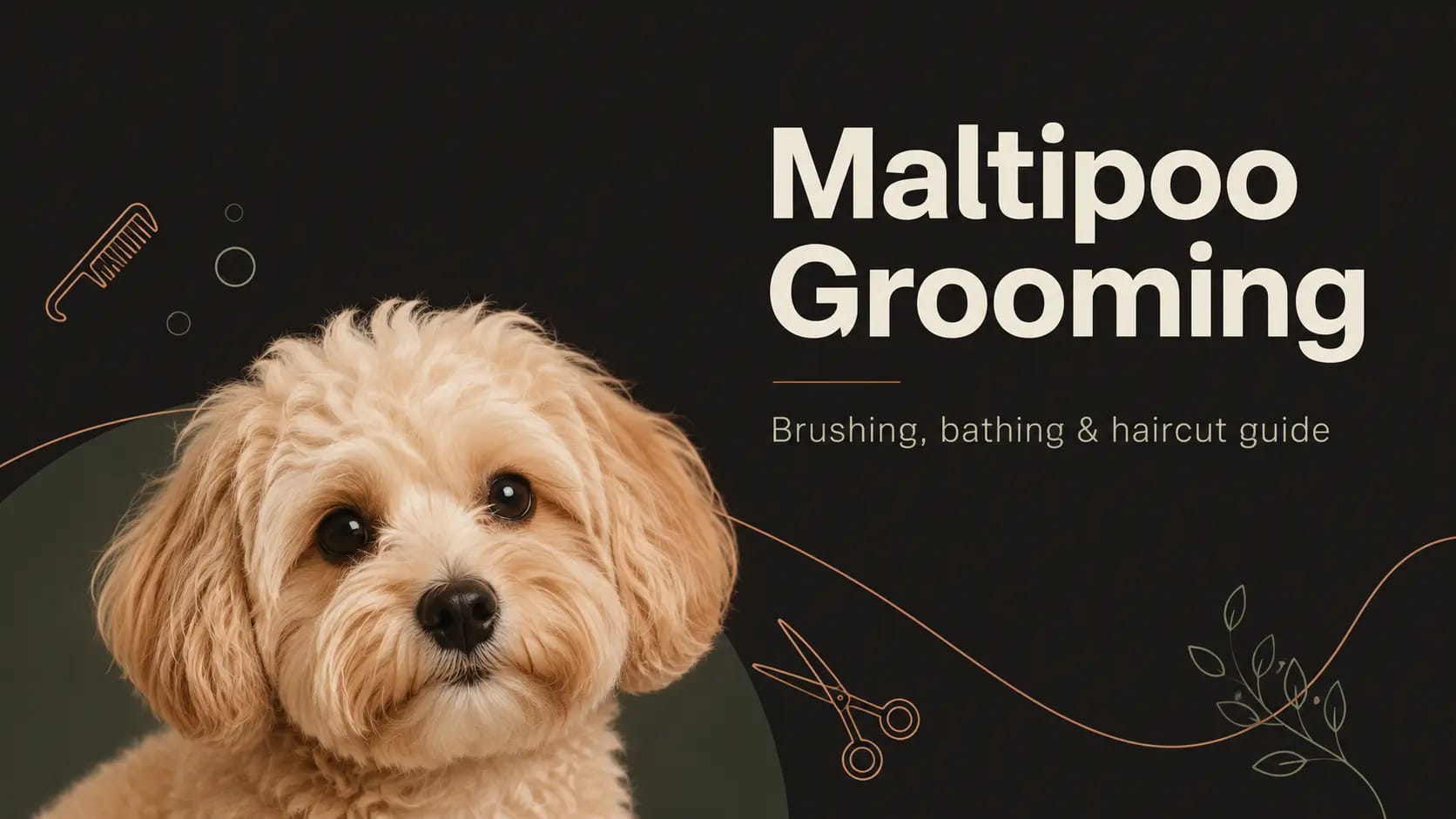
Maltipoos need brushing several times a week, a bath every three to four weeks, and a professional trim every six to eight weeks. That might sound like a lot for a small dog, but the coat is the reason. A Maltipoo's hair grows continuously and does not shed to the floor the way most dogs do. Loose hair stays trapped in the coat, and without regular brushing it forms mats that pull on the skin and can be painful to remove.
The good news: once you build a simple routine, it is very manageable. Here is exactly what that routine looks like.
Maltipoo grooming at a glance
| Task | How often |
|---|---|
| Brushing (curly coat) | Daily |
| Brushing (wavy coat) | 3 to 4 times per week |
| Brushing (straight or silky coat) | 2 to 3 times per week |
| Bathing | Every 3 to 4 weeks |
| Professional trim | Every 6 to 8 weeks |
| Nail trim | Every 3 to 4 weeks |
| Ear check and wipe | Once a week |
| Teeth brushing | Several times a week |
Why does a Maltipoo need regular grooming?
Most dogs shed. The dead hair falls out, lands on your sofa, and is done with. A Maltipoo's coat works differently. The hair grows in a slow, continuous cycle and holds onto loose strands instead of releasing them. That is what keeps your floors clean. The trade-off is that all that trapped hair has to go somewhere, and without brushing it tangles into mats.
Mats are not just untidy. A tight mat pulls on the skin constantly, causing irritation, hiding moisture and debris underneath, and eventually leading to skin infections if left long enough. The areas most prone to matting are:
- Behind and under the ears
- Under the collar
- In the armpits and between the front legs
- Around the groin and belly
- Around the mouth (from eating and drinking)
Check these spots first every time you brush. Catching a tangle early takes seconds. Removing a full mat is uncomfortable for your dog and sometimes requires a vet or professional groomer.
How often should you brush a Maltipoo?
That depends on the coat type your Maltipoo inherited.
Curly coat (more Poodle): Brush daily. The tight curls trap loose hair most effectively, which is great for shedding but means tangles form quickly without daily attention.
Wavy coat (the most common type): Brush three to four times a week. This is the easiest coat to maintain for most owners and still gives the classic teddy bear look.
Straight or silky coat (more Maltese): Two to three times a week is usually enough. This coat sheds a little more visibly but is the most forgiving when you miss a day.
When in doubt, brush more rather than less. You cannot over-brush a Maltipoo if you are doing it gently.
The right tools make a real difference
Three tools handle most of what you need:
Slicker brush: The go-to for curly and wavy coats. The fine wire bristles work through the coat and pull out loose hair before it mats. Use this for your main brushing sessions.
Pin brush: Better for straight and silky coats, or for a gentle detangle before a bath. The rounded pins glide through without pulling.
Metal comb: Use this after the brush to check your work. Run it through from root to tip. If it snags, there is still a tangle the brush missed. The comb catches it before it becomes a mat.
Start at the feet and work upward toward the head. Hold the base of any tangle with your fingers while you work through it, so you are not tugging on the skin.
How often should you bathe a Maltipoo?
Every three to four weeks is the right range for most dogs. Bathe too often and you strip the natural oils that keep the coat soft and healthy, which leads to dry, flaky skin. Leave it too long and oil buildup makes the coat greasy, attracts dirt, and speeds up matting.
A gentle dog shampoo made for sensitive skin works well. Rinse thoroughly, because shampoo residue left in the coat can irritate the skin.
One tip that prevents most post-bath tangles: comb the coat through while it is still damp, before it dries. Once a mat dries it sets, and removing it is far harder. A wide-tooth comb right after the towel dry, before you reach for the hairdryer, takes a few minutes and saves a lot of grief.
How often does a Maltipoo need professional grooming?
Most Maltipoos need a professional groom every six to eight weeks. At each appointment a groomer will trim the coat to your chosen length, clean the ears, trim the nails, and check the sanitary areas. Some owners extend this to every ten or twelve weeks by keeping up with brushing at home. If you let brushing slip between appointments, every six weeks is safer.
When looking for a groomer, ask specifically whether they have experience with doodle or poodle-mix coats. A groomer used to shorter-coated breeds may not be familiar with the mat-prone areas or the coat types unique to Maltipoos.
On cost: professional grooming for a small dog like a Maltipoo typically runs between thirty and ninety US dollars per session, depending on your location, the groomer's experience, the coat condition, and the style you choose. A dog that comes in regularly and is well brushed between visits costs less to groom than one coming in matted.
Popular Maltipoo haircut styles
Most owners settle on one of three styles:
Teddy bear cut: The most popular choice. The groomer keeps the coat at a medium, even length all over, rounds the face to give a soft, rounded look, and leaves the ears fluffy. It is easy to maintain at home between visits and suits any coat type. Most Maltipoo owners start here.
Puppy cut: Similar to the teddy bear but with the body coat trimmed shorter, usually one to two inches. This is a practical choice for summer or for owners who want longer stretches between professional appointments.
Lamb cut: The coat on the body is kept short while the legs are left a little longer and fluffy. It is less common but gives a classic, neat appearance.
There are more elaborate styles, including the continental cut and the Maltese-style long coat, but those require more frequent professional grooming and significant brushing at home to maintain.
Ears, nails, and teeth
These three are easy to overlook but matter for your dog's health.
Ears: Maltipoos can grow hair inside the ear canal, which traps moisture and creates the right conditions for infection. Check the ears weekly. A healthy ear is pale pink, odor-free, and has no dark discharge. Wipe the outer ear with a damp cotton pad. If you see redness, smell something off, or notice your dog shaking its head or scratching at its ears, see your vet before it becomes an infection.
Nails: Trim every three to four weeks, or when you can hear the nails clicking on a hard floor. Long nails change the angle of the paw, which puts strain on the joints and can affect the way a small dog walks over time. If you are not comfortable trimming nails yourself, ask the groomer to include it at each visit.
Teeth: Dental disease is the most common health problem in small dogs, and Maltipoos are no exception. Brushing your dog's teeth several times a week with a dog-safe toothpaste makes a real difference. Start slowly, let the dog get used to the process, and build up to a full brush. Dental chews and water additives help between brushes but are not a replacement. Ask your vet about a professional dental clean if tartar has already built up. For more on Maltipoo health, see our Maltipoo health guide.
Getting a puppy used to grooming
The earlier you start, the easier grooming becomes for both of you. Puppies that are handled gently from a young age, touched around the ears, paws, mouth, and belly, and introduced to the brush as something pleasant tend to become dogs that tolerate grooming calmly.
Keep early sessions short. A few strokes with a soft brush followed by a treat is enough. Build up gradually. By the time your puppy needs its first professional groom, usually around twelve to sixteen weeks after the first vaccine clearance, it should be comfortable being handled.
If your adult dog already dislikes grooming, go slowly. Short sessions, calm handling, treats throughout, and stopping before frustration builds will improve things over time.
When grooming reveals a problem
While you are brushing and bathing, you are also doing a quiet health check. Notice anything unusual, a lump, a sore spot, excessive scratching, redness, hair loss in patches, or a strong smell from the ears or skin, and book a vet visit. You are the person who knows what your dog's coat normally looks and feels like. That familiarity is one of the most useful things regular grooming gives you.