
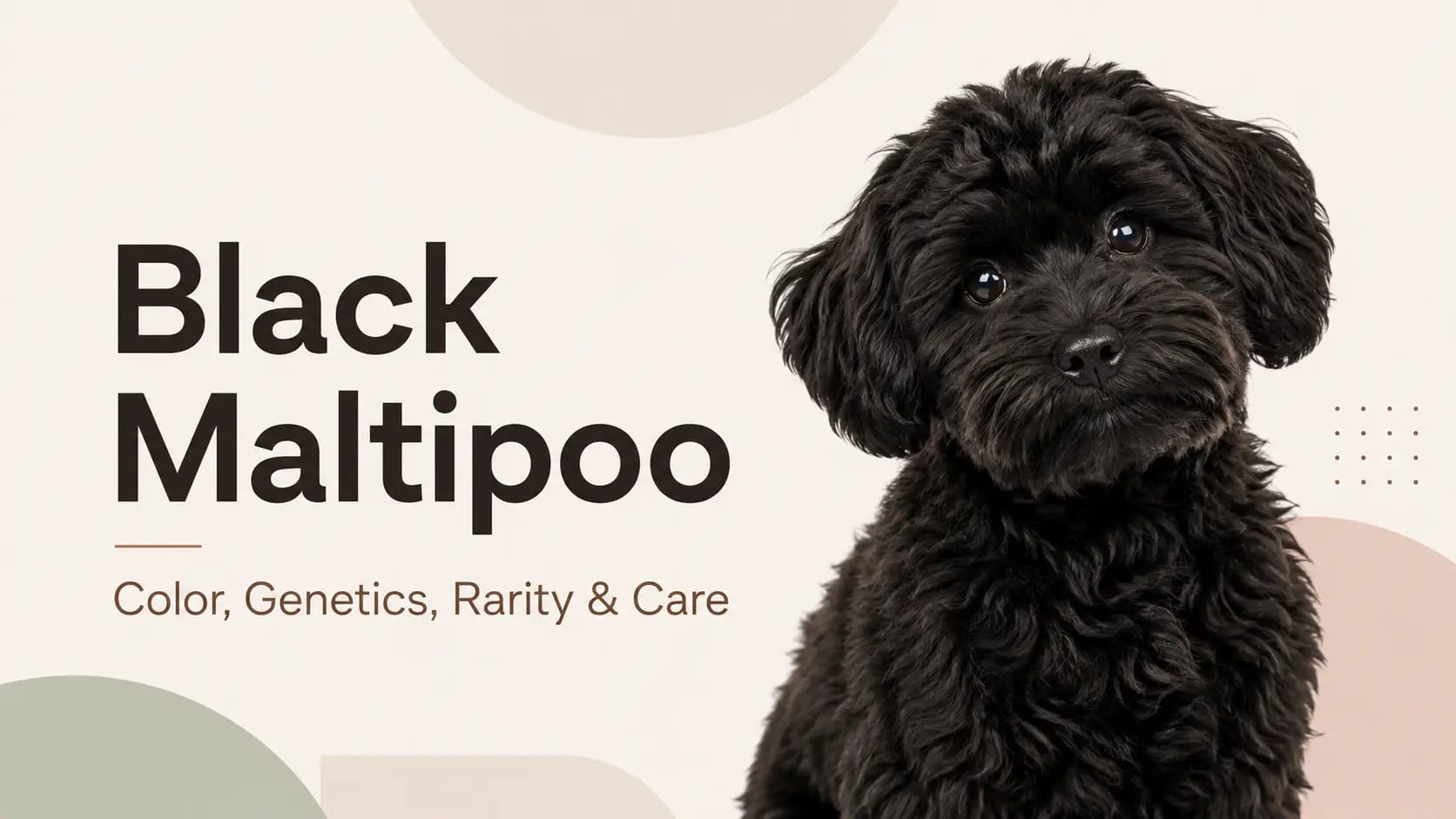
A black Maltipoo is rare. Most Maltipoos come in white, cream, or apricot because the Maltese parent only ever carries white coat genetics. Black can only enter the picture through the Poodle side, and even then, the genetics have to align in a specific way. When they do, the result is a striking, dark-coated dog that many owners specifically seek out.
There is one important thing to understand before you start looking for one: a black Maltipoo may not stay black. Many fade significantly with age. Whether yours holds its color or shifts to silver, charcoal, or gray depends on genetics that are largely set before the puppy is born. This guide explains exactly what to expect, how to predict it, and how to care for a dark-coated Maltipoo.
| Rarity | Rare. One of the harder Maltipoo colors to produce |
|---|---|
| Color source | Poodle parent only. Maltese carries no black pigment |
| Will it stay black? | Not always. Many fade to silver, gray, or charcoal with age |
| When fading starts | Usually from 6 months, progressing through the first two years |
| Black and white patterns | Parti, tuxedo, phantom, mismark |
| Size (full grown) | Same as any Maltipoo: 5 to 20 lbs, 8 to 14 inches |
| Temperament | Same as any Maltipoo. Color does not affect personality |
| Price premium | Yes. Black Maltipoos typically cost more due to demand and rarity |
What Makes a Black Maltipoo?
Maltipoo coat color comes from the two parent breeds. The Maltese almost always carries a white coat. It has no pigment genes for black, brown, or any dark shade. This means every dark color in a Maltipoo comes entirely from the Poodle parent.
Poodles can be black, and black is actually a dominant color in the Poodle gene pool. When a black Toy Poodle is bred with a white Maltese, the offspring have a chance of inheriting a black coat. But it is not guaranteed, even with a solid black Poodle parent. Multiple genes influence the final outcome, and because the Maltese contributes no dark pigment, the presence of any dilution or lightening gene in the Poodle's lineage will push the puppies toward lighter colors.
The two main pigments involved are eumelanin, which produces black and brown, and pheomelanin, which produces red, cream, and apricot tones. A black coat requires strong eumelanin expression with no modifying genes diluting it. In a Maltipoo cross, that combination is genuinely rare.
Black is more consistently achievable in F1b and multigenerational Maltipoos, where a dark Maltipoo is bred back to a black Toy Poodle. The increased Poodle influence makes it more likely that strong black pigmentation carries through.
Are Black Maltipoos Rare?
Yes. Solid black is one of the rarest Maltipoo colors. The combination of genetics required: a black Poodle parent, no dilution genes, and enough dominant black expression to overcome the Maltese's white genetics, is difficult to achieve consistently. Even breeders specifically working toward black coats will see variation within litters.
Black and white combinations (parti, tuxedo, phantom) are slightly less rare because they require less total dark pigmentation than a solid black coat. But fully solid black Maltipoos, with no white markings or fading, are genuinely hard to find.
Because they are rare and in demand, black Maltipoos typically come with a price premium over more common colors. More on that in the price section below.
Will a Black Maltipoo Stay Black?
This is the question most buyers do not think to ask, and it is the most important one.
Many black Maltipoos do not hold their color. The Poodle carries what breeders and geneticists call the Progressive Graying Gene, also known as the G locus or fading gene. A puppy that inherits this gene will begin to lighten as it matures. A dog born jet black may, by the age of two, be a soft silver, steel gray, or charcoal. The fading is gradual and most noticeable in the first two years of life.
After about two years, the coat color stabilizes. Whatever color the dog has settled at by that point is generally the color it keeps.
There are three main outcomes for a black Maltipoo as it ages:
It holds its color. The dog stays dark throughout its life, or lightens only minimally. This happens when the Poodle parent carries no fading gene and comes from a line of non-fading blacks. A black Poodle parent that has remained fully black at age five or older is a positive indicator.
It fades to gray or silver. This is the most common outcome. The coat gradually shifts from jet black to dark charcoal, then to a softer silver or gray. The fading typically starts around the muzzle and eyes, then spreads across the body. Dogs that follow this path are sometimes described as "blue" Maltipoos: a dilute shade of black that reads as a cool slate or steel tone in natural light.
It clears significantly. In some cases, particularly in dogs where the Poodle parent carried strong silvering genes, a black coat can lighten much more dramatically. A puppy that is almost fully black at 8 weeks may arrive at adulthood with only residual dark shading on the ears, face, and tail.
How to Predict Whether Your Puppy Will Fade
You cannot know with certainty, but you can get close with the right questions.
Ask about the Poodle parent's current coat color and age. A Poodle that is fully black at five years old is much more likely to pass stable black genetics than one showing silver or gray. If the Poodle parent has already started to silver, the puppies almost certainly carry the fading gene.
Ask whether the breeder has done genetic testing for the G locus. Reputable breeders working with dark colors often do. A dog that tests negative for the progressive graying gene will hold its color. A dog that tests positive will fade.
Ask to see photos of previous litters at two years old. If earlier litters from the same parents faded significantly, yours is likely to do the same.
If you specifically want a dog that will stay black, prioritize breeders who can provide genetic test results over those who simply promise a black puppy.
Black and White Maltipoo: Coat Patterns
Not all black Maltipoos are solid. Several coat patterns combine black with white, and each has a distinct look.
Parti: White is the base color, with large patches of black distributed across the body. No specific pattern is required. Each parti Maltipoo is unique. The patches can cover the back, sides, head, or tail in any combination.
Tuxedo: Black covers most of the body, with white on the chest, chin, paws, and sometimes the face. The contrast creates a formal, dressed look. One of the most visually striking black and white patterns.
Phantom: A dark base (black or dark brown) with specific lighter tan or cream markings on the eyebrows, cheeks, chest, lower legs, and under the tail. The pattern mirrors how a Doberman or Rottweiler is marked. Both colors need to be present for a true phantom to show.
Mismark: Mostly solid with a small patch or splash of white in one area, often the chest or a paw. Not a true pattern, just an irregular marking.
Black and white Maltipoos are also subject to the fading gene, so the black areas of their coat can lighten over time just as they would on a solid black dog.
Full Grown Black Maltipoo: Size and Appearance
Color does not affect size. A black Maltipoo reaches the same adult dimensions as any other Maltipoo: typically 5 to 20 pounds and 8 to 14 inches tall at the shoulder, depending on whether the Poodle parent was a Toy or Miniature.
What is distinctive about a fully grown black or dark Maltipoo in appearance is the coat contrast. Dark coats show loose hairs, dust, and debris more visibly than light ones. White and cream Maltipoos show tear staining and dirt on the face. Black Maltipoos show white hairs from shedding (their own or other pets) and environmental dust more readily on the body. Regular grooming keeps this manageable.
For a detailed adult size guide with a weight chart by age, see our full grown Maltipoo guide.
Black Maltipoo Personality and Temperament
Coat color has no effect on personality or behaviour. A black Maltipoo has the same temperament as any Maltipoo: affectionate, intelligent, playful, and closely bonded to its family. The breed's core traits come from the Maltese and Poodle cross, not from the coat color gene.
Any Maltipoo can develop separation anxiety if not taught independence early. All are responsive to positive reinforcement training. All are low-shedding and better suited to people with mild dog allergies than most breeds.
For a full breakdown of Maltipoo personality, training responsiveness, and what to expect day to day, visit our Maltipoo temperament guide.
Grooming a Black Maltipoo
The coat type on a black Maltipoo, wavy or curly, determines grooming needs more than the color does. The brushing frequency, professional grooming schedule, and mat-prevention routine are the same as for any Maltipoo.
That said, dark coats have two specific considerations worth knowing.
Sun exposure causes fading. Extended time in direct sunlight can bleach a dark coat just as it does human hair. This is not a health concern, but if maintaining a rich black coat matters to you, limit prolonged sun exposure and use a UV-protective dog coat for long outdoor sessions in summer.
Use a shampoo designed for dark coats. Residue from low-quality or improper shampoos can dull and gray a dark coat over time. Look for shampoos labeled for dark or black coats, which often contain ingredients that enhance depth and reduce brassiness. Avoid shampoos with whitening or brightening agents, which are formulated for light coats and will work against a dark one.
Tear staining is less visible but still present. Black and dark-coated Maltipoos do get the same tear staining as light-coated ones. It simply does not show as orange or rust-colored against a dark face. Check the inner corner of the eyes regularly to keep the area clean.
For a full guide to brushing technique, bathing, mat prevention, and haircut styles, visit our Maltipoo grooming guide.
Black Maltipoo Haircuts
Black Maltipoos suit the same haircut styles as any Maltipoo. The teddy bear cut, puppy cut, and lamb cut all look striking on a dark coat because the contrast between the dark fur and the dog's eyes and markings is clearly visible at any coat length.
One consideration specific to dark coats: shorter cuts show the contrast between the dark outer coat and any lighter undercoat or growing-in gray if the dog is fading. If your Maltipoo has started to fade and you clip it short, the silver or gray may be more apparent than it is when the coat is left at a medium length. This is purely aesthetic but worth being aware of before asking for a kennel cut on a fading black dog.
For a full breakdown of every haircut style with coat-type matching and grooming frequency, visit our Maltipoo haircuts guide.
Black Maltipoo Price: What to Expect
Black Maltipoos typically cost more than cream, white, or apricot Maltipoos from the same breeder. The price premium reflects genuine scarcity: they are harder to produce and fewer are available in any given year.
From a reputable breeder, a black Maltipoo puppy generally runs $2,000 to $4,500, somewhat above the standard range for more common colors. Very small teacup-sized black Maltipoos or those with rare patterns like phantom can push higher.
One point worth making clearly: paying more for a black coat does not guarantee the color will hold. If keeping a black coat long-term is the primary reason for the premium, make sure the breeder has done genetic testing to confirm the puppy is clear of the progressive graying gene. A black puppy with no genetic testing is a higher-priced gamble on color, not a certainty.
For full Maltipoo ownership cost context, including annual expenses beyond the purchase price, see our Maltipoo cost guide.
Finding a Black Maltipoo
Because black is a less common color, breeders who consistently produce it are in the minority. Waiting lists are common. Expect to wait three to six months or longer for a puppy from a breeder specifically working with dark genetics.
When you search, prioritize breeders who can discuss the genetics clearly. A breeder who knows the G locus status of their Poodle parent, can show photos of previous black litters at two years old, and is transparent about the fading possibility is far more reliable than one who simply advertises "rare black Maltipoo puppies" without explanation.
The general guidance for finding any reputable Maltipoo breeder applies here: look for health-tested parents, puppies raised in the home, vet records provided, and a written health guarantee. The color of the dog does not change those fundamentals.
For a full guide to what to look for in a Maltipoo breeder and what red flags to avoid, see our Maltipoo puppies guide.
No. Coat color has no influence on temperament. Black Maltipoos are the same affectionate, playful, intelligent dogs as those in any other color.